
Efficient forestry, scaled by autonomy
Harvest trees from the air
AirForestry develops autonomous electric drones that perform forest thinning from the air. The result is forestry without ground disturbance, with high operational efficiency and lower environmental impact than conventional methods.
Airborne thinning is changing forestry
500 Mt CO2 per year
0 soil damage
Since the drones operate from the air, there is no soil compaction, no root damage, and no machine tracks left in the stand.
500Mt CO2
By thinning forests with our method, forests have the potential to sequester up to an additional 516 Mt of carbon globally per year when fully scaled.
23Mt CO2/y in Sweden alone.
8% growth
Research shows that our method can increase forest growth with up to 8% per harvest cycle (~80y). Meaning more value for the forest owner.
Watch us in action
What flying forestry looks like
Step by step:
How the system works
AirForestry’s system combines autonomous flight with a specialized harvesting tool that is extremely lightweight and robust, developed specifically for flying thinning. Multiple drones work simultaneously to harvest trees. Here is how it works, step by step, for one drone in the fleet:
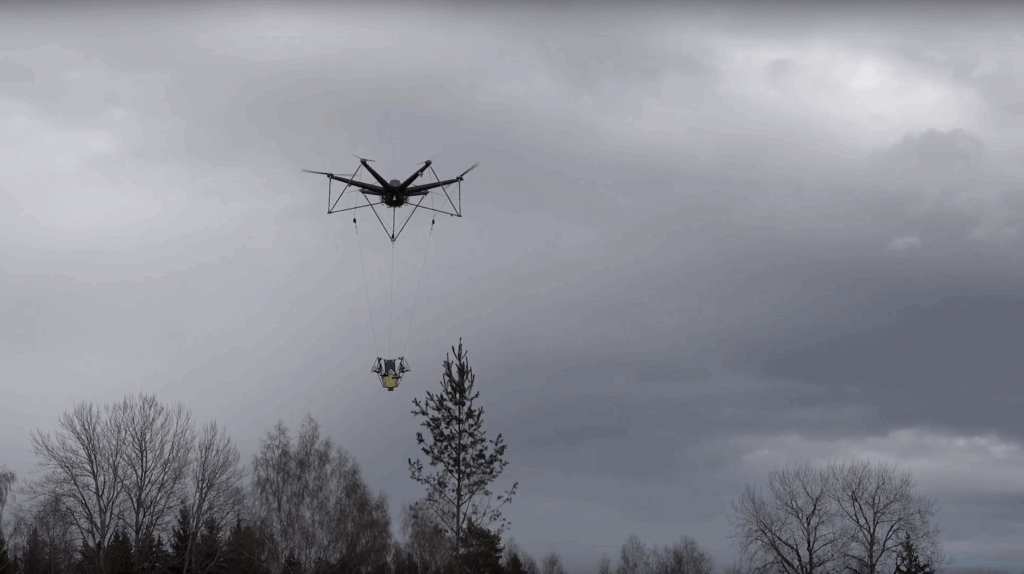
Step 1
Tree identification
The drones automatically navigate to, and select, suitable trees using AI and computer vision.
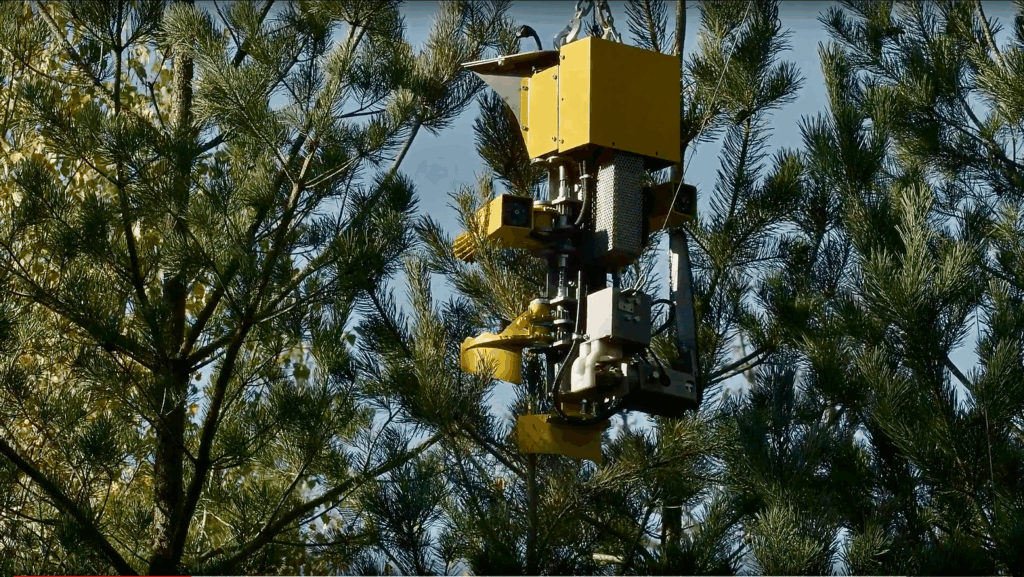
Step 2
Positioning above the tree
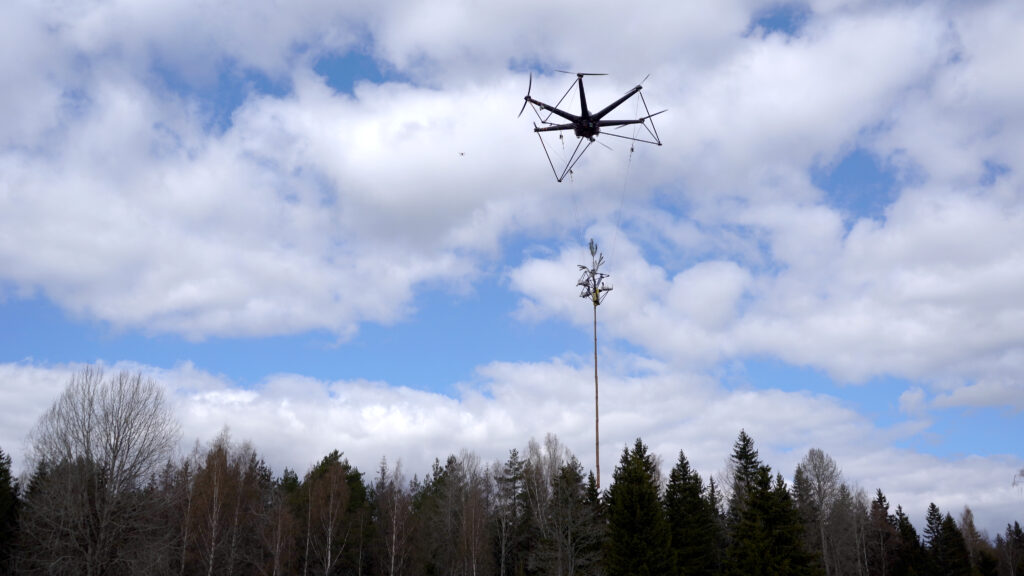
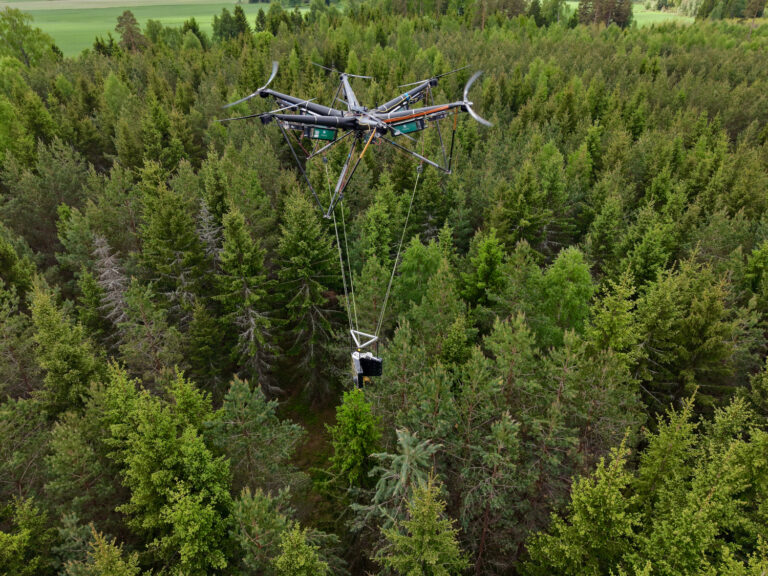
The drone positions itself above the tree and the harvesting tool grips the top. The tool is released from the top and delimbs the tree using gravity.
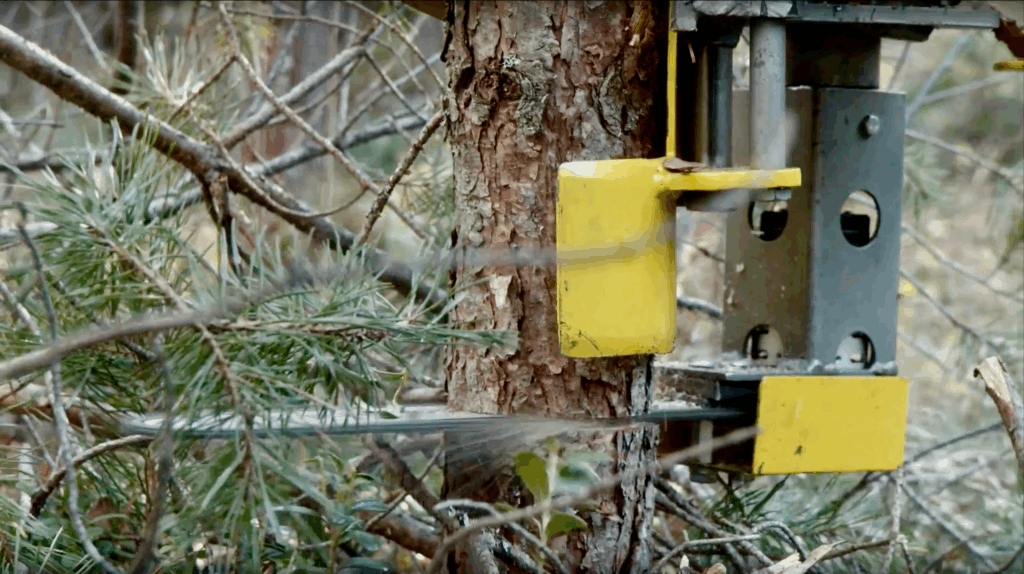
Step 3
Tree felling
The tree is cut close to the ground.
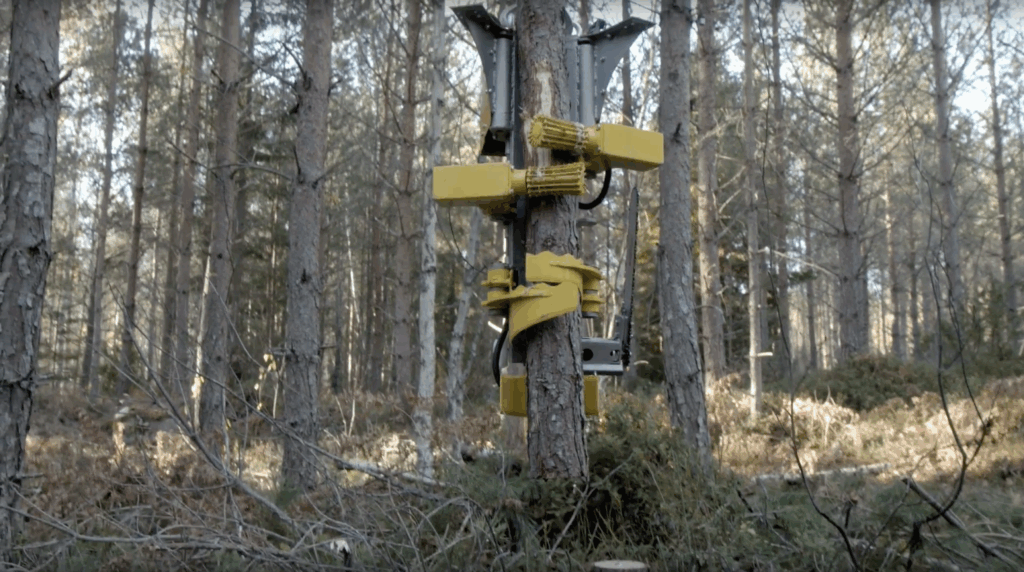
Step 4
Tree extraction
After felling, the harvesting tool grips the tree and the drone lifts it out of the forest.
Step 5
Drops. Resets. Repeats.
The drone flies the tree to the drop-off site, then heads straight back out for the next round.
Explore our solution
Airborne precision forestry
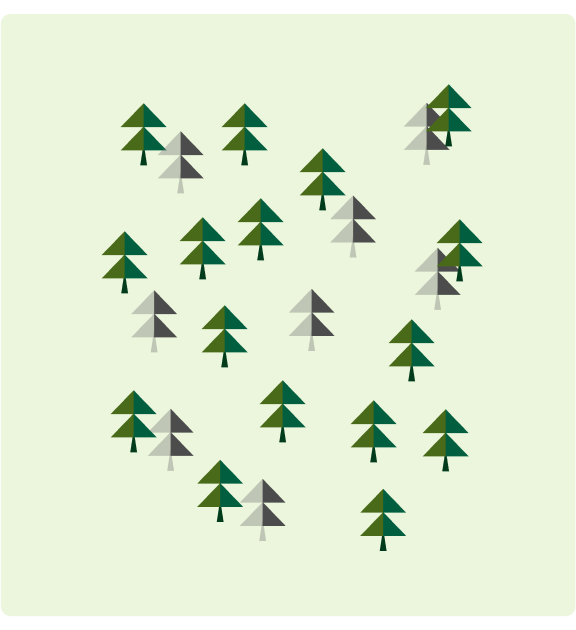
Through drone thinning, we avoid the constraints of logging trails and can select exactly which trees to remove. The goal of thinning is to create better conditions for the remaining trees and a more fully developed stand over time.
-

Green trees – the ones left standing
Trees selected for their growth potential. Preserved because they make the forest stronger in the long run.
-

Grey trees – The ones we remove
Trees that are overcrowded, of lower quality, or suppressing the growth of other trees, are identified and removed (thinned out) with precision from the air.
What's new at AirForestry
Latest news
Pitch
It all started with a simple idea of a new way to thin forests
AirForestry develops an autonomous, electric multi-drone system for flying forest thinning, enabling more efficient forestry operations with lower environmental impact than conventional methods.
And it’s moving fast!
Our founder Olle Gelin...
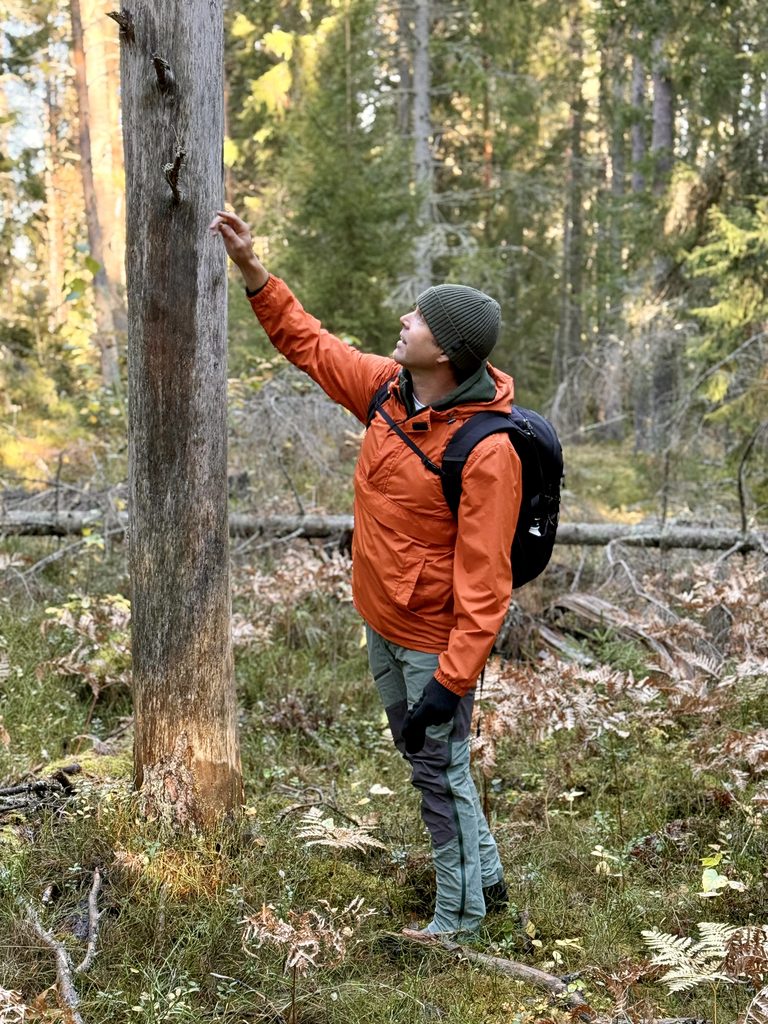
… grew up in the forest. He represents the sixth generation managing a solar-powered family farm with surrounding woodland just outside Uppsala.
For Olle, sustainable forestry and a fossil-free forest industry have long been both a passion and a clear ambition. It’s no surprise, then, that his career has included developing hybrid trucks at Scania, followed by eight years at Skogforsk, where he initiated and led one of the world’s largest projects in forest automation, AUTO2.
Mauritz's electric vision
Our founder, Dr Mauritz Andersson, is a physicist and electric aviation enthusiast, with twelve years of research in quantum optics and eleven years of industrial experience developing optical systems.
For Mauritz, the search for sustainable solutions to the climate crisis through innovative technology has been the main driving force. Contrary to common assumptions, he believed that aviation could be the most energy-efficient mode of transport — provided it is electric.
The idea was born
The moment Olle and Mauritz first met, it was clear to both of them that forestry was ready for a completely new kind of innovation: an airborne solution for harvesting trees.
They secured early sponsorship from three of Europe’s largest forest owners, built the first versions of the drone, and registered AirForestry AB in the spring of 2020.
Caroline Walerud joins the team
In the summer of 2020, Olle and Mauritz met Caroline Walerud, a biologist turned serial entrepreneur and deep tech investor. Caroline and her family office, Walerud Ventures, with investments including Klarna, Midsummer, and Paebbl, joined the company as a founding investor.
Prototype 0.1
Our first prototype, one meter in diameter, was assembled in just a couple of days and flew its first test flight in June 2020. Its purpose was primarily to validate the rotor concept, and it made a strong impression, on both customers and investors.
The first drone
On 18 October 2021, the team assembled the first full-scale drone, 6.2 meters in diameter.
First takeoff
The first successful flight of the full-scale drone.
Early commercial interest
The Swedish Energy Agency awarded AirForestry a €3M grant for further technology development. Offtake agreements signed with Sveaskog, Högtorps Gård, and Hargs Bruk.
€10.3M funding round
The company closed its €10.3M funding round with top-tier investors including SEB Greentech VC, Sveaskog, Kiko VC, Capital T, and Northzone as lead.
First full-cycle harvest
The first full-cycle harvest of a tree in the field was completed.
€2.5M+ €10M financing from EIC
AirForestry was awarded a €2.5M grant through the European Innovation Council (EIC) Accelerator, an EU initiative supporting startups with breakthrough innovations and high growth potential. The grant is part of the EIC’s blended finance program, with an additional €10M in potential EIC Fund equity investment, to support commercialization of the company’s fossil-free, drone-based harvesting system.
Two consecutive trees
The first full-cycle harvest of two consecutive trees in the field was completed. Demonstrating that, already at this stage, the system is competitive when translated to a six-drone setup (fully scaled).
€4.4M from Vinnova
AirForestry, together with a consortium of key stakeholders in the field, was awarded a €4.4M grant from Vinnova, Sweden’s innovation agency, to advance the development of autonomous drone systems for forest thinning.
Autonomous harvest in the field
For the first time, the drone completed an autonomous harvest sequence in the field: navigating to position, identifying the tree, delimbing, felling, and lifting to roadside.
World's first drone harvest of a tree in a real forest
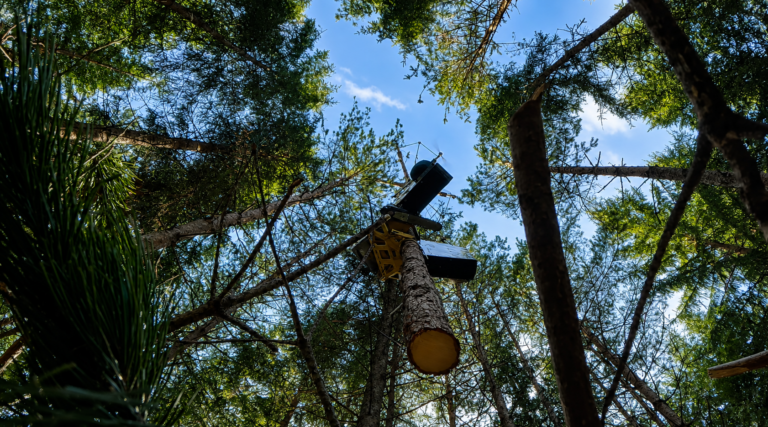
We successfully harvested trees in an actual forest stand, marking the transition from field testing to real forestry conditions.